



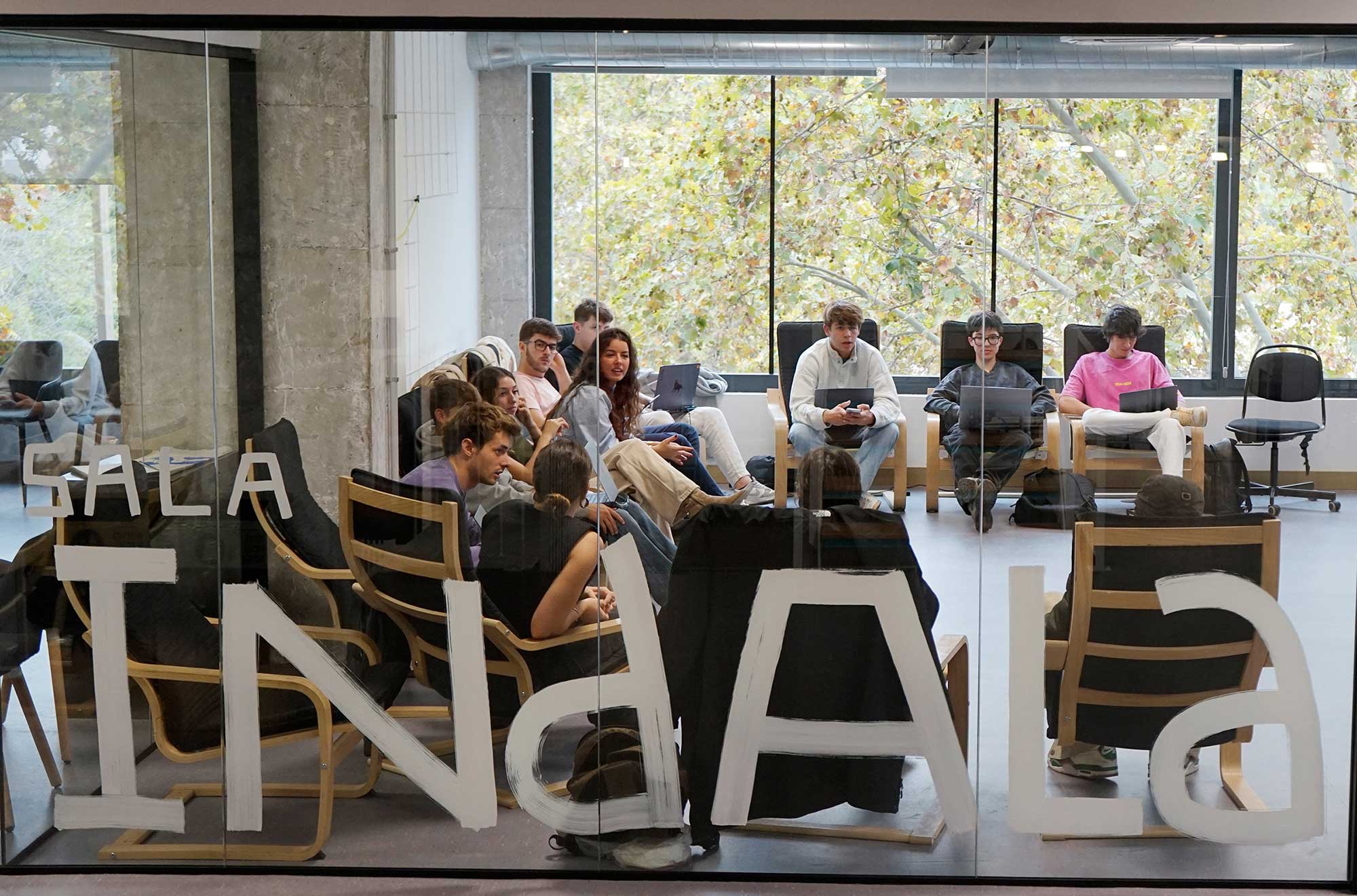
Have you ever wondered what studying LEINN is really like? Beyond the official degree description, prospective students usually want to know: what will my day-to-day life look like if I choose this program?
Will I wake up every morning to go to lecture halls? Will I have final exams? Furthermore, will I work alone or with a team, and how much free time will I actually have?
Studying LEINN (Liderazgo Emprendedor e Innovación) is radically different from a traditional university degree. Consequently, your daily life looks more like that of an entrepreneur building their company than that of a conventional student.
In this article, we explain in detail what a typical week in LEINN looks like, what kinds of projects you’ll work on, how assessment works, the key differences from other degrees, and, most importantly, whether this rhythm and way of learning are a good fit for you.
A Typical Week in LEINN
To understand the day-to-day of LEINN, the first thing you have to do is erase the image of a traditional university schedule packed with classes from 9:00 am to 2:00 pm. Instead, your week in LEINN is organized around three main types of activities: working in your team company, coaching sessions, and technical learning spaces.
Monday through Friday: work in your team company
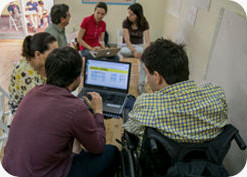
The majority of your time (between 50–60% of your week) goes toward working on your team company — the real company you create with your team from day one. However, this doesn’t mean you’re constantly sitting in a specific classroom. On the contrary, you and your team organize your time to move your business projects forward.
For instance, a typical Monday might start with a team meeting at 9:30 am where you plan the week, review goals, and distribute tasks. After that, some team members get to work on product development, while others head out to meetings with potential customers or focus on digital marketing strategy. Thus, no two days are alike because everything depends on what your project needs at that moment.
In LEINN you have physical spaces available at the TeamLabs/ learning labs (Madrid, Barcelona, or Málaga) where you can work, but you can also go out for fieldwork, customer meetings, supplier visits, or work from other spaces if your project calls for it. Therefore, you have the autonomy to manage your time the way a real entrepreneur would.
Coaching sessions with your Team Coach
Several times a week (generally 2 sessions), you meet with your Team Coach and the whole team. These sessions are not classes where someone explains theory to you. Rather, they are coaching spaces where your Team Coach helps you reflect on what you’re experiencing in your project.
Imagine your team is facing a conflict about how to make decisions, or you’ve hit a wall on a technical problem, or you need perspective on whether your business model makes sense. In these scenarios, your Team Coach doesn’t tell you what to do. Instead, they help you ask the right questions, look at the problem from different angles, and learn from what’s happening.
These sessions are usually held in small groups (your complete team company) and have a very practical, reflective quality. Consequently, this is where experiential learning comes alive: you experience something in your company, reflect on it with your coach, conceptualize what you’ve learned, and apply it again.
Technical knowledge spaces
Although LEINN is built on learning by doing, there are also moments when you need to acquire specific technical knowledge: finance, digital marketing, legal, technology, service design, and more. This knowledge isn’t delivered in disconnected lectures. Instead, it comes through workshops, intensives, and focused training sessions that are activated when your project actually needs them.
For example, when your team company needs to structure its accounting, there’s a specific workshop on financial management for startups. Likewise, when you need to launch a digital campaign, there’s training in online marketing. These sessions tend to be more compact and intense (2–4 hours), highly practical, and immediately applicable to your project.
Furthermore, there are specialized advisors in legal, finance, and emerging technologies (Artificial Intelligence, Big Data, and more) you can consult when you’re facing specific challenges. They don’t wait for a scheduled class next week; rather, you ask for help as soon as you need it.
Demo days and community spaces
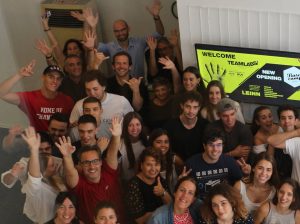
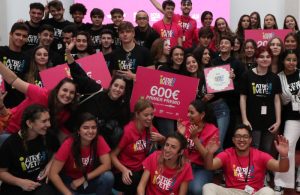
It’s common to have demo days where teams present their progress, share learnings, and receive feedback from teammates, Team Coaches, and external mentors. As a result, these spaces are valuable because they let you see what other teams are building, find inspiration, learn from their mistakes, and celebrate their wins.
Additionally, there are community spaces where cross-cutting themes are explored: personal leadership, team culture, purpose, and social impact. Ultimately, LEINN doesn’t focus solely on building profitable companies. It focuses on developing conscious individuals who are committed to generating positive impact.
Projects in LEINN: From Idea to Real Company
When we talk about the “day-to-day” in LEINN, we’re mainly talking about working on your business projects. But what are these projects like? What kinds of companies do LEINN students actually build?
Year 1: experimentation and discovery
In your first year in LEINN, the goal isn’t to immediately create a million-euro startup. On the contrary, the goal is to experiment, fail fast, and learn. Your team (team company) starts by identifying real problems they want to solve, validating ideas with potential customers, and testing different approaches.
It’s common in year one to work on several different projects throughout the year. Some work, while others don’t, but all of them teach you something valuable. For instance, you might start with a tech app idea, discover it isn’t working, pivot to a service for local businesses, and end up finding traction there. Failure is part of the process, and the ability to learn from it is rewarded.
First-year projects tend to be smaller in scale: local services, simple digital products, events, consulting. What matters is that they are real: you have actual customers, you invoice (even if amounts are small), and you learn to manage a business from scratch.
Technical modules, readings, and first Learning Journey
You’ll also begin your technical learning in legal basics, entrepreneurship finance, and emerging technologies. You’ll have access to an online platform with modules containing articles, videos, and exercises to complete individually. Each person must complete the individual layer before the team layer can be unlocked. The fundamental difference from traditional education is that these modules always build a bridge between theory and practice.
Reading plays a central role in LEINN as well. From a list of more than 400 books, you’ll complete several readings throughout the year based on your interests and the reality of the projects you’re working on. After each reading, you’ll write an essay applying what you’ve learned to your current projects and share it with your team. And you’ll keep reading throughout the rest of the program.
In this first year you also make, together with your team, the first Learning Journey to a country in Europe, specifically Finland — the country where the methodology behind LEINN originated.
Years 2 and 3: consolidation and growth
As you advance through LEINN, your projects gain depth and ambition. In years two and three, many teams already have an established company with recurring revenue, a clear value proposition, and a validated business model. Here the challenge is growth: expanding, improving processes, and professionalizing operations.
Some examples of LEINN student projects at this stage include digital marketing agencies working with multiple clients, tech apps with thousands of users, physical products sold online and in stores, specialized consulting services, and social-impact events that generate revenue. You can see concrete examples on the LEINN projects page.
At this stage you continue with your learning in legal, finance, and technology, keep up with your reading, and take part in international Learning Journeys to countries in Latin America such as Costa Rica (one month in year 2, focused on intercultural business in Latin America) or in Asia, such as South Korea and India (three months in year 3, focused on international trade and adapting to high-complexity environments). Consequently, you develop projects in completely different cultural contexts and expand your global vision of entrepreneurship.
Year 4: acceleration and capstone project (PFG)
In your final year, you first complete the Incubation and Acceleration programs, and then finish with the Capstone Project (PFG, Proyecto de Fin de Grado). LEINN is full of elements that support the natural evolution of entrepreneurship, but one of the most decisive arrives in that final year: the Startup Acceleration Program (SUP) and the Corporate Intra-Incubation Program (COP). You’ll choose one of the two.
Comparing SUP and COP acceleration programs
The SUP is a process designed to professionalize, consolidate, and grow the startups created within LEINN. Each team is supported in refining its model, validating growth, and moving forward with purpose, transforming promising projects into businesses with vision and structure. Ideally, the projects being accelerated are ones the team plans to continue after graduation.
In the COP, over three months, you work with real companies to tackle their most complex strategic challenges. This is not a traditional internship where you observe and make coffee. Instead, companies of the caliber of SEAT, Newtral, TOUS, and Grupo Anaya entrust you and your team with real challenges that are critical to their future. These are the kinds of problems they can’t address in the day-to-day routine because they require a completely different perspective. That’s why you and your team have three full months to research, prototype, validate, and present innovative value propositions.
Year 4 also includes your Capstone Project (PFG), which instead of being a traditional academic paper is typically a high-impact entrepreneurship or innovation project where you apply everything you’ve learned. There are two types of PFG:
- Entrepreneurship track: with your own project. An entrepreneurship PFG is a continuation of the work the LEINNer has been developing in one of their projects within the LEINN degree. The LEINNer defines the specific challenge they’ll work on, with clear goals, well-defined and time-bound project phases, and measurable outcomes that allow progress to be tracked across the months of the PFG.
- Intrapreneurship track: inside someone else’s company. In collaboration with the company, a specific challenge is defined for the LEINNer to work on during the PFG period. Consequently, that challenge has clear objectives and key results that allow progress to be measured across the duration of the PFG.
How Assessment Works
One of the most radical differences between LEINN and a traditional degree is how your learning is assessed. There are no memorization-based final exams.
Competency-based assessment
In LEINN, your development is assessed across 21 competencies that define a team entrepreneur (teampreneur). These competencies are grouped into three categories:
- Cross-cutting competencies: cooperative, creative, critical, lifelong learner, global mindset, resilient, conscious and socially committed.
- Personal competencies: creative, open, courageous, future-conscious, team player, honest, passionate.
- Professional competencies: global mindset, innovative, entrepreneurial leader, digital, visionary, results-oriented, connected.
Each competency is assessed through evidence from your real work: how you managed a conflict in your team, how you validated your idea with customers, how you pivoted when something didn’t work, how you built a marketing campaign, how you pitched your project to investors.
Assessment means building awareness and committing to continuous improvement
Assessment in LEINN is ongoing. In addition, twice a year — typically in December and June — there is a week-long team assessment process consisting primarily of dialogue sessions. What gets assessed includes:
- Your work in the team company: The real results of your company (revenue, customers, products built), but above all the process and what you’ve learned.
- Your personal and team development: How you’ve grown as a person, how you contribute to your team, how you handle conflict, how you lead.
- Reflection and self-assessment: Your capacity to critically analyze your own work, identify learnings, and spot areas for improvement.
- Feedback from multiple sources: From your Team Coach, your teammates, external mentors, and real customers. It’s a self-assessment session with the team and coaches using different tools that help evaluate the skill profile of the degree across three categories: teampreneur, teamlearner, and teamleader.
This system can feel disorienting at first if you come from the traditional “study, take an exam, receive a grade” model. But it’s far more realistic: in professional life, nobody evaluates you with a multiple-choice test. Instead, you’re evaluated by the results you produce and how you work with others.
The learning portfolio
Throughout LEINN you build a learning portfolio where you document your projects, reflect on your experiences, and gather evidence of your competency development. This portfolio is not a bureaucratic exercise. Rather, it’s a powerful tool for your own reflection and for showing future employers or investors what you’re actually capable of.
When you graduate from LEINN, you don’t just have an official university degree. You also have a portfolio full of real projects, concrete evidence of your capabilities, and a clear narrative of your development as an entrepreneur.
Comparison Table: A Typical Day in LEINN vs. a Traditional Degree
| Aspect | Traditional degree | LEINN |
|---|---|---|
| Schedule | Classes from 9:00 am to 2:00 pm or 3:00 pm to 8:00 pm, fixed timetable | Flexible — you organize your time around your project’s needs |
| Main activity | Attending lectures and taking notes | Working in your real company and on impact projects |
| Teamwork | Occasional, for specific group assignments | Daily — your team company is the core of everything |
| Assessment | Final exams each semester | Ongoing, competency- and project-based |
| Instructor role | Delivers content and evaluates via exams | Team Coach who guides your learning process |
| Theory | Studied before applying (if applied at all) | Introduced when your project actually needs it |
| Connection to the real world | Internships in year 3 or 4 (maybe) | From day one, with real customers and real invoicing |
| Location | Closed university classrooms | Learning labs designed for experimentation and teamwork on real projects, closer to a coworking space with meeting rooms |
Key Differences from a Traditional Degree
Beyond the day-to-day specifics, there are deep philosophical differences between studying LEINN and studying a traditional university degree. Understanding them will help you decide whether this model is right for you.
From knowledge consumer to value creator
In a traditional degree you are mainly a knowledge consumer: professors transmit information, you absorb it, memorize it, and reproduce it in exams. In LEINN, however, you are a value creator from day one: you generate products, services, and solutions that provide real value to real customers.
This shift in role is radical. You’re not preparing for professional life — you’re already living a version of it. Consequently, you’re not waiting to graduate to get started. You start on day one.
From certainty to productive uncertainty
Traditional degrees give you certainty: you know exactly which courses you’ll take each semester, what content each exam will cover, and what grade you need to pass. LEINN immerses you in productive uncertainty: you don’t know whether your idea will work, you don’t know what problems you’ll face tomorrow, you don’t know exactly what your project will look like in six months.
This uncertainty isn’t chaos; rather, it’s the natural context of entrepreneurship and innovation. As a result, you learn to make decisions without having all the information, to pivot when something isn’t working, and to manage ambiguity. These are fundamental skills in today’s world.
From individualism to interdependence
In the traditional model, even when there are group projects, your success depends mainly on you: your grades are yours, your transcript is individual. In LEINN, on the other hand, your success is deeply tied to your team’s. Your team company advances or stalls as a collective.
This forces you to develop genuine collaboration skills: effective communication, conflict management, collective decision-making, and shared leadership. Ultimately, you learn that in the real world, ambitious projects require strong teams, not lone heroes.
From rigid time to flexible time
Traditional universities organize time into semesters, class weeks, and 50-minute sessions. LEINN organizes time around the needs of your project. For example, if you need an intense week working on your product launch, you dedicate it. If you need to spend three days doing market research, you do it.
However, this flexibility requires maturity and responsibility. Nobody tells you hour by hour what to do; instead, you decide how to invest your time. This prepares you far better for today’s professional world, where more and more professionals manage their own schedules.
From declarative knowledge to competence
Traditional degrees focus on declarative knowledge: knowing what something is, being able to explain it, and reproducing it on an exam. LEINN focuses on competence: knowing how to do something in real contexts, knowing how to apply knowledge to solve problems.
The difference is enormous. Being able to explain what design thinking is on an exam is one thing. Actually applying design thinking to improve the user experience of your real product is something else entirely. Therefore, LEINN focuses on the second.
Is LEINN’s Day-to-Day Right for You?
After learning what studying LEINN is really like day to day, it’s time to ask yourself honestly: does this fit who you are? There’s no universally correct answer. It depends on your personality, your learning preferences, and your goals.
LEINN is probably right for you if…
- Predictable routines bore you: If the idea of the same schedule every week, the same classes, and the same exams feels demotivating, LEINN will offer you variety and energy.
- You learn better by doing than by listening: If you’re someone who needs to touch, experiment, and try things in order to learn, this model was built for you.
- Teamwork motivates you: If you enjoy collaborating, building things with others, and thrive in team dynamics, you’ll love the LEINN day-to-day.
- You take initiative and work autonomously: If you can organize yourself, make decisions without being told every step, and manage your own time, you’ll thrive in this environment of responsible freedom.
- Uncertainty energizes you: If not knowing exactly what tomorrow holds feels exciting rather than frightening, the LEINN model will suit you perfectly.
- You want real experience right now: If you don’t want to wait until year three or four to touch professional reality, LEINN puts you in the middle of it from day one.
LEINN is probably NOT right for you if…
- You prefer clear structure and certainty: If knowing exactly what you’ll study each day, what each exam will cover, and having a clearly marked path makes you feel secure, the traditional model will suit you better.
- Working in teams is a struggle for you: If you prefer working alone and intense group dynamics drain you, LEINN can be frustrating because teamwork is constant.
- You need a lot of external direction: If you need someone to tell you step by step what to do, to have everything structured for you, and taking initiative is difficult, this model of autonomy may overwhelm you.
- Your goal is civil service exams or regulated professions: If you want to be a doctor, lawyer, or aeronautical engineer, or prepare for competitive exams that require very specific technical knowledge, LEINN is not the right training for you.
- Uncertainty is very stressful for you: If not knowing whether your project will succeed, whether you’ll have revenue this month, or what problems will come up triggers paralyzing anxiety, you may prefer a more predictable environment.
Tips for adapting to LEINN’s day-to-day
If you decide to take the leap and enroll in LEINN, here are some tips from current LEINNers to help you adjust:
- Embrace the initial discomfort: The first few weeks can feel disorienting. That’s normal — you’re learning a completely new way to study. Give it time.
- Communicate openly with your team: Open and honest communication is the key to making your team company work. Don’t let conflicts fester. Address them early.
- Make the most of your Team Coaches and mentors: Don’t wait until you’re completely lost to ask for help. These professionals are there to support you. Use them.
- Organize your time wisely: Flexibility is wonderful, but it requires discipline. Build routines that work for you, even if they look different from everyone else’s.
- Celebrate small wins: In entrepreneurship, success comes gradually. Celebrate every customer you land, every improved version of your product, every new thing you learn.
- Take care of your wellbeing: The LEINN pace can be intense. Therefore, make sure you’re sleeping well, exercising, and carving out time for yourself. A burned-out entrepreneur is not a productive one.
Frequently Asked Questions About the LEINN Day-to-Day
How many hours a day do I dedicate to LEINN?
LEINN is a full-time, demanding university degree, so you should plan for around 35–40 hours per week on average. The difference is that you organize how to distribute that time. Some days you’ll work more intensely, others less, depending on what your project needs. The key is that you learn to manage your time autonomously.
Is there a fixed class schedule?
There are no lecture classes with a fixed schedule as in a traditional degree. There are scheduled moments for sessions with your Team Coach, technical workshops, and community spaces, but most of your time is organized by you and your team. This requires responsibility, but it gives you the freedom to work when you’re most productive.
Can I combine LEINN with a job?
LEINN is a full-time, demanding degree, so combining it with a conventional job is difficult. However, many students generate income through their own team company during the program. In fact, data shows that LEINN students in Málaga have invoiced over €260,000 through their companies during their studies — proof of what real-world learning produces.
What happens if my team isn’t working well?
Conflicts and team challenges are a natural part of the process. LEINN doesn’t avoid them. It teaches you to handle them. You have coaching support specifically for working through team dynamics. In some cases, if a situation is truly unsustainable, there are mechanisms for teams to restructure — but the priority is always learning to resolve conflicts, because that’s a fundamental skill in any professional context.
Are there vacations like in other universities?
Yes, LEINN follows the academic university calendar with vacation periods at Christmas, Holy Week, and summer. However, many LEINNers use these periods to work intensely on their projects, especially when they’re in a growth phase. Others disconnect completely. You decide how to manage your time.
Conclusion: A Day-to-Day That Transforms You
The day-to-day in LEINN is radically different from any traditional university degree. It doesn’t look like what you experienced in high school, and it doesn’t look like what your friends are doing at other universities. It’s more demanding in some ways (it requires more autonomy, more initiative, and more comfort with uncertainty), but it’s also more stimulating, more realistic, and more transformative.
Studying LEINN isn’t just about acquiring knowledge in entrepreneurship and innovation. Rather, it’s about becoming a different person: more autonomous, more resilient, more capable of working with others, and better equipped to carve out your own professional path.
If after reading this article you feel curiosity and excitement (along with a hint of vertigo), that’s probably a good sign. Vertigo is natural when you’re facing something new and challenging. The question isn’t whether you feel afraid. The question is whether that fear comes with a desire to discover, to learn, and to grow.
The best way to know if LEINN is right for you is to experience it firsthand. Visit the TeamLabs/ labs in Madrid, Barcelona, or Málaga, attend a Puertas Abiertas (Open House) session, check out one of their public events listed on the website’s calendar, and talk to current students. There’s nothing like seeing with your own eyes what the atmosphere is like, how teams work, and what the day-to-day is really like.
And if you finally decide to take the leap, get ready for a university experience you won’t forget: intense, challenging, real, and deeply transformative.
Keep Reading
If you found it useful to learn about what the LEINN day-to-day is like, we recommend reading our article on what degrees exist for learning by doing instead of memorizing, where we place LEINN within the broader landscape of active and experiential learning methodologies.